
The History of Silvermere
A silver rush, a lakeshore mill, and the lake-and-mountain town that chose to grow at The Narrows.
Since time immemorial
Where the lake meets the mountains, a city grew.
Silvermere's history is told through its geography. Silver Lake and the Silvercrest Mountains have drawn people to this valley for thousands of years: first the Indigenous Peoples of the region, then prospectors chasing silver in the Silvercrest Mountains, then the mill families who built a town on the lakeshore. What they built here is still here.
This is the short version of that story, told chronologically. For more detail, the Silvermere & District Heritage Society, the Station Museum, and the Old Mill Heritage Centre are the places to start.
At a glance
- Incorporated
- January 1, 1909
- Amalgamated with Cedar Flats
- 1971
- Oldest living structure
- Old Mill Footbridge, 1916
- On the territory of
- the Indigenous Peoples of the region
Eleven chapters in the story.
Told chronologically, from deep time to the present day.
Time immemorial
An Indigenous homeland
Long before the silver rush, the shores of Silver Lake and the banks of Cedar Creek were home to Indigenous Peoples who fished The Narrows, travelled the lake, and followed the valley's trails. Those routes and crossings shaped where the town would later grow.
1880s
Silver in the Silvercrest
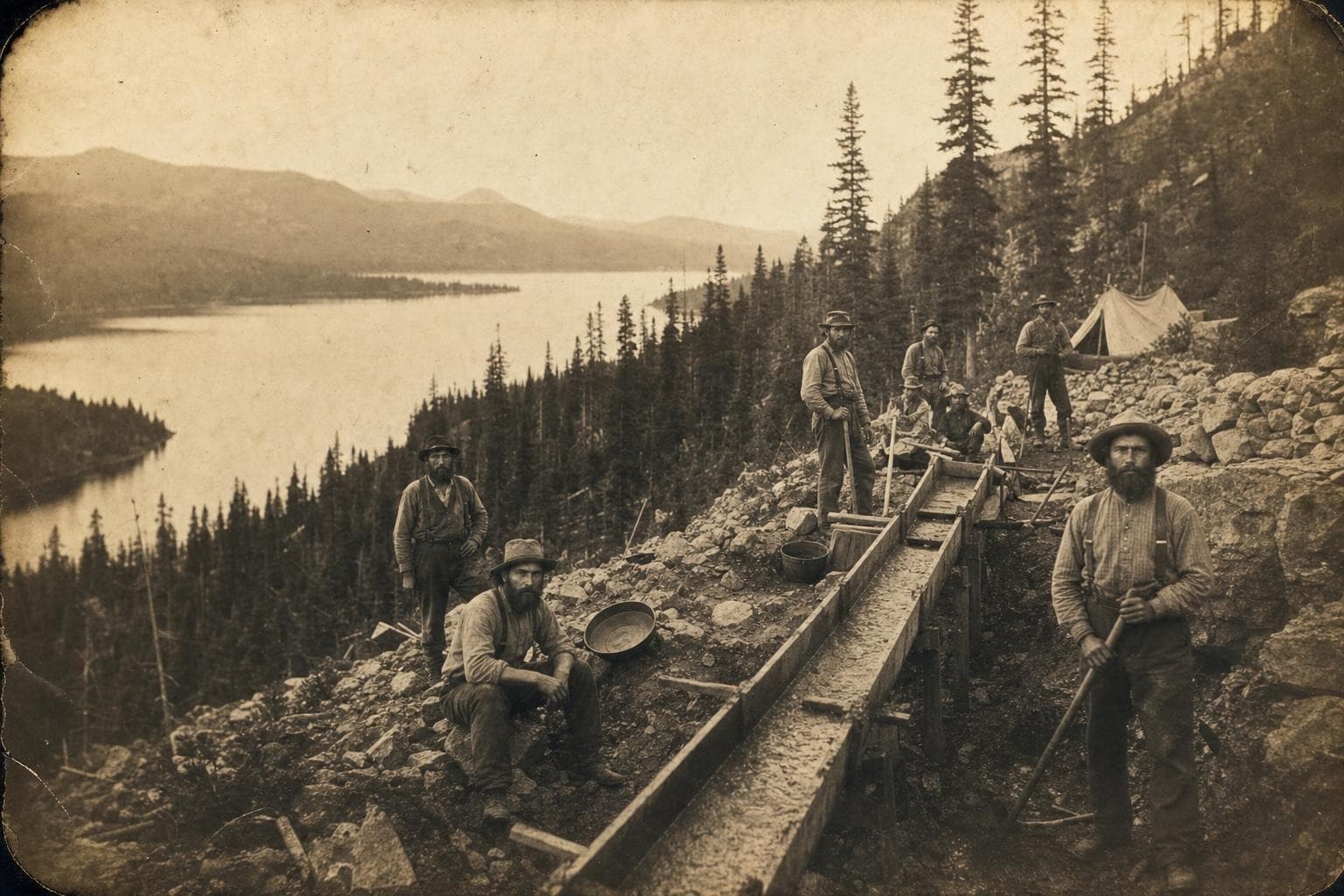
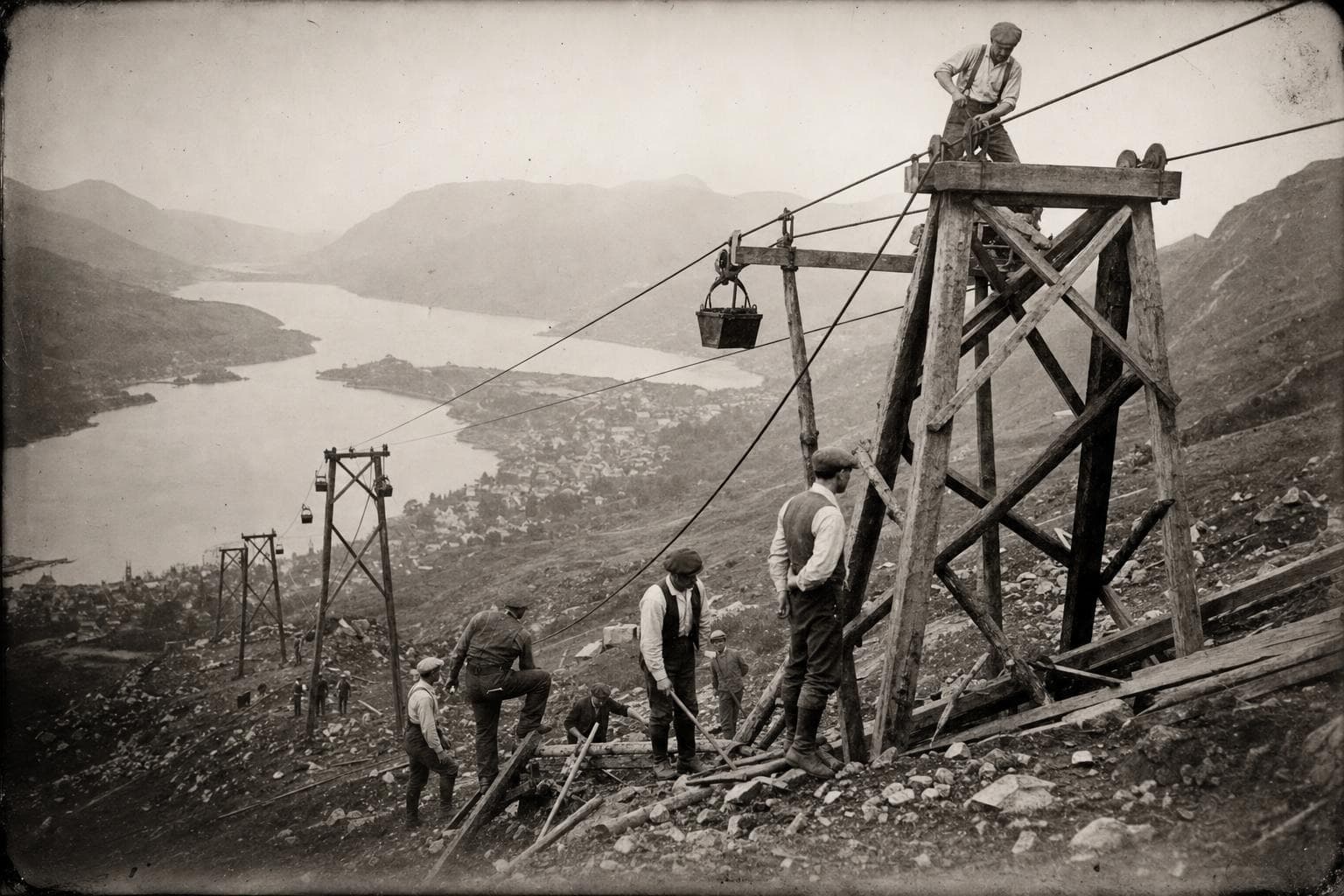
Prospectors working the Silvercrest Mountains struck silver in the foothills above the lake. The richest shaft, the Pelletier Stope, made fortunes until the night in 1911 when its crews “hit the lake's roots” and an underground spring drowned the workings before dawn, the flooded pit that is now Quicksilver Cove. To move ore down to the water, the mines strung the Skyline aerial tramway in 1908, run for half a century by Reeva Vane, the “Bellwoman,” whose brass bell still rings on the cable car climbing to the Eyrie today. The name “Silvermere” joined the silver of the hills to the “mere,” an old word for lake.
1900s
The Old Mill and a company town
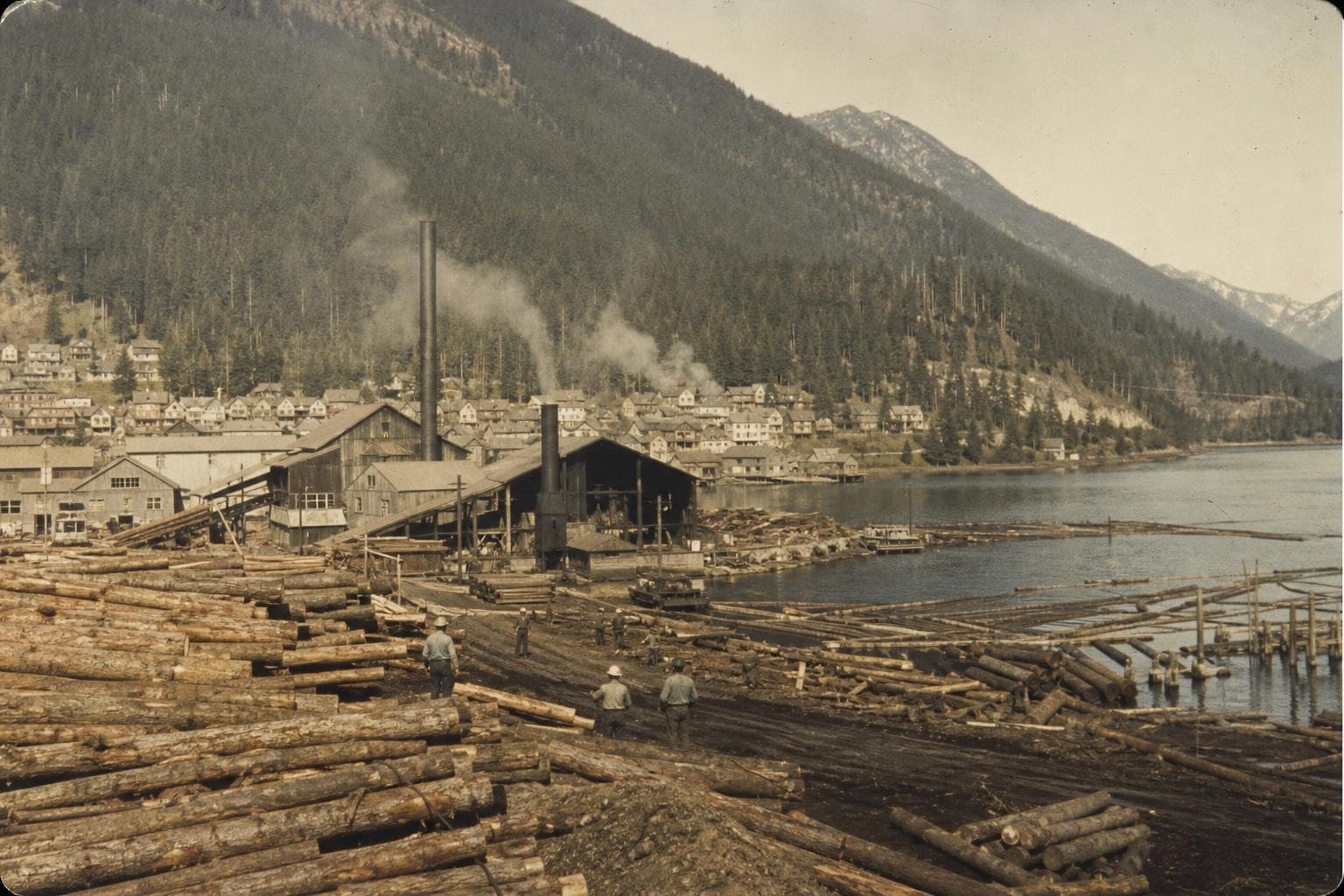
As the richest silver seams played out, lumber took over. The Highwater Lumber Company built a large sawmill on the lakeshore, the Old Mill, and a company town grew around it. The Old Mill District still carries the grid, the worker cottages, and the street names of that era.
The Old Mill Heritage Centre at 112 Heritage Way tells this chapter in depth.
1909
Incorporation
With a mill, a rail spur, and a steady population, the settlement at the lakehead was surveyed and incorporated as the Town of Silvermere on January 1, 1909. Josiah Crane, a millwright who championed the public waterfront, served as the first reeve.
1916
The Old Mill Footbridge
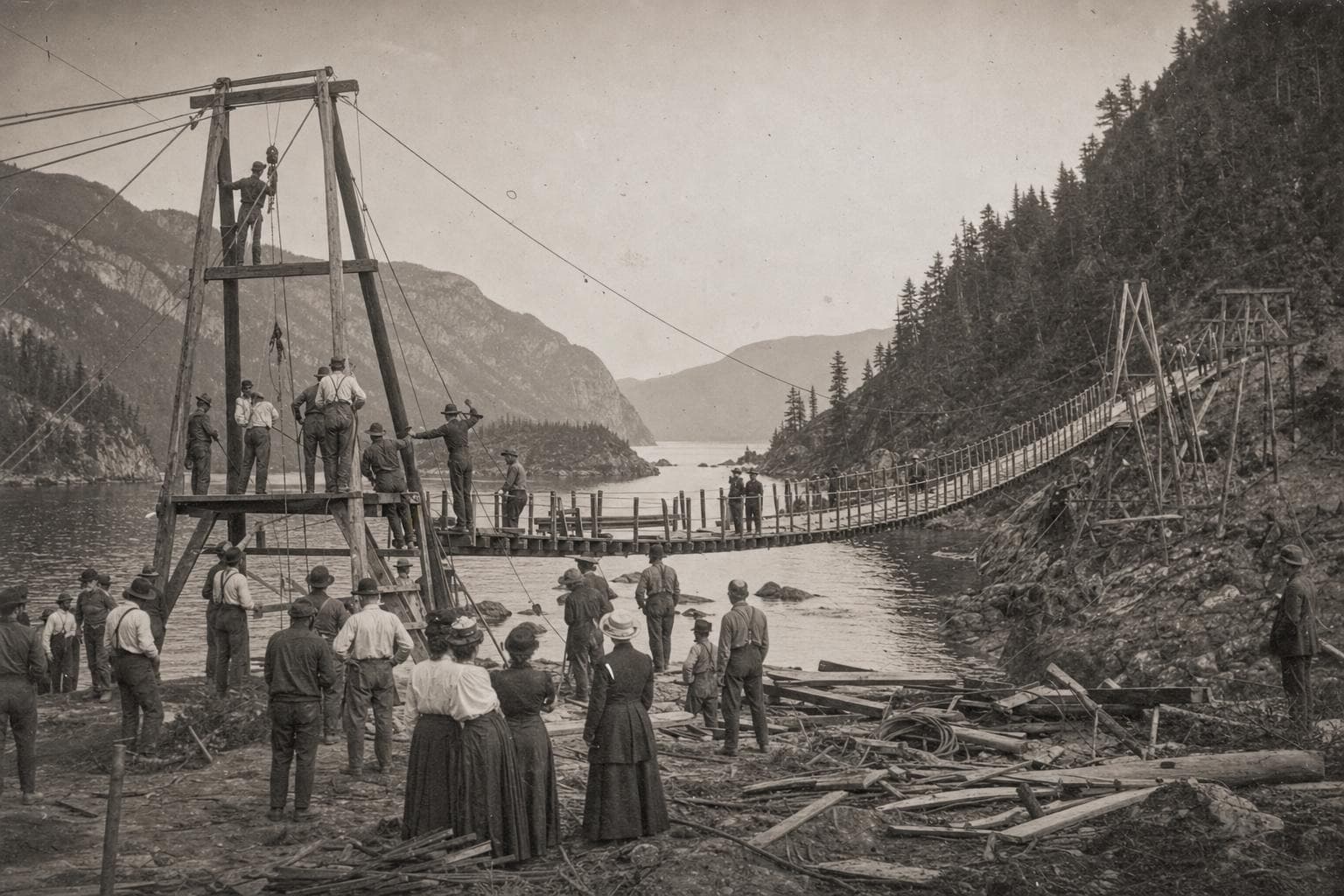
Mill workers completed a cable footbridge across the Narrows to reach the timber camps on the Northshore, a feat of community engineering built largely with volunteer labour. Restored in the 1990s, it still carries pedestrians and cyclists and is one of the few early-twentieth-century suspension footbridges of its kind in the region.
Walk the Old Mill Footbridge across the Cedar Creek. It still carries pedestrians and cyclists.
1930s
Boom, bust, and the shipyard
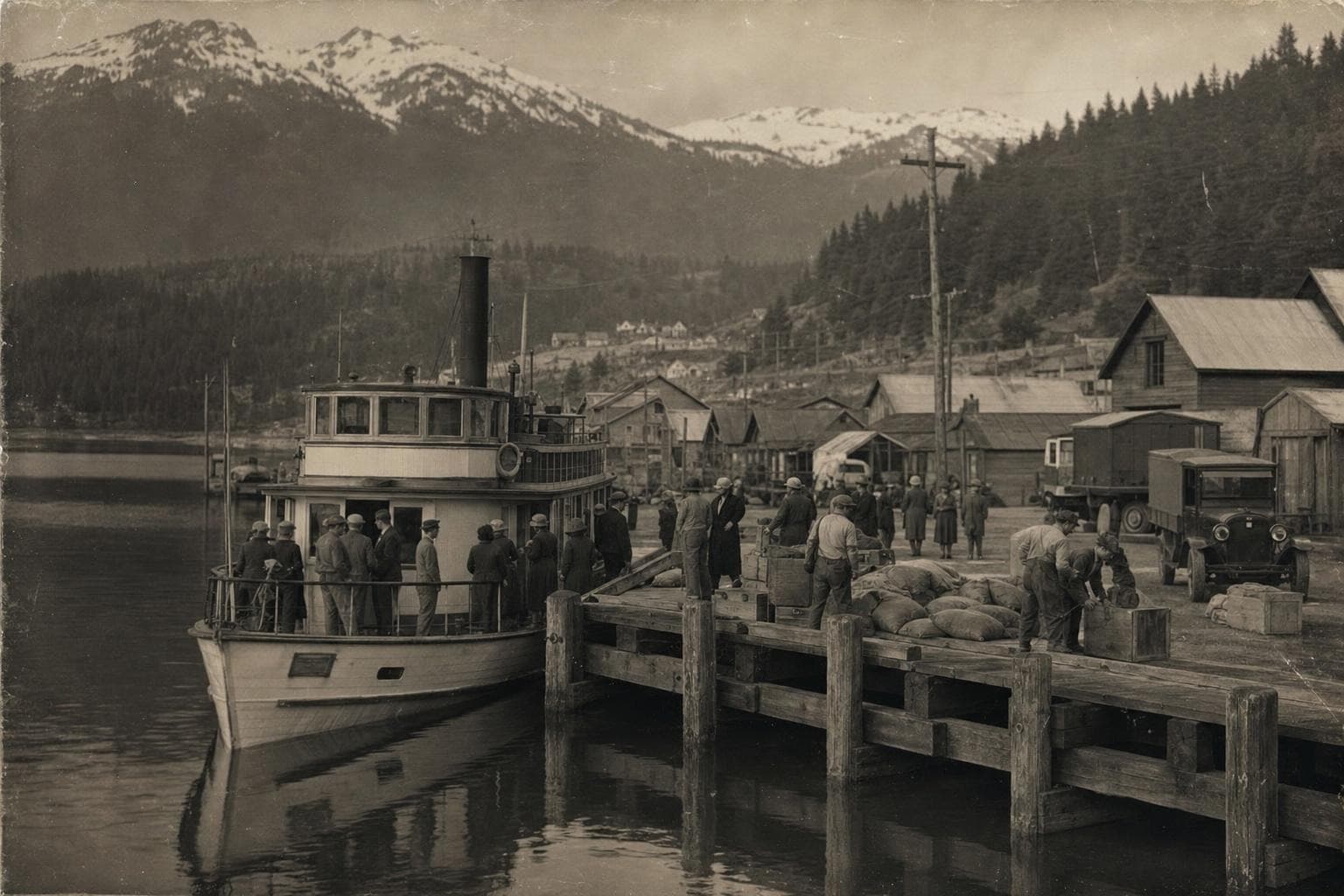
Falling silver prices and the Depression tested the young town. Lumber, a small lakeside shipyard that built and repaired the steamers working Silver Lake, and the railway kept Silvermere going through the lean years.
1950s
Wartime growth and post-war industry
A wartime airstrip, later expanded into the West Highlands Regional Airport, brought new connections to the valley. After the war, forestry boomed, the rail spur was upgraded, and Silvermere grew as the service centre for the surrounding Highlands.
1964
Highwater College opens
Highwater College opened its doors in 1964, bringing students, instructors, and trades training to the valley and anchoring Silvermere as the education hub of the West Highlands. The campus still sits above the lake on the old mill bench.
1971
Amalgamation with Cedar Flats
Silvermere and the neighbouring community of Cedar Flats, to the south, formally amalgamated to create a single city. The distinction still echoes in street names and neighbourhood identity today.
1990s to 2013
Restoring the landmarks, building an identity
The Silvermere Public Library opened in 1992. The Station Museum preserved the old rail station in the Old Mill District, and the Old Mill Footbridge was restored and reopened. In 2013, the first Silvermere Lakelight Festival lit the Silver Lake promenade with lanterns and light installations, beginning what is now the city's signature winter festival of light.
2020s
A modern lake city
Silvermere approaches a population of 15,000, with an economy anchored by Highwater College, the West Highlands Regional Airport, regional health services, forestry, tourism, and small business. A new Housing Strategy and a modernized Zoning Bylaw (Bylaw 411) are reshaping the city for the next chapter.
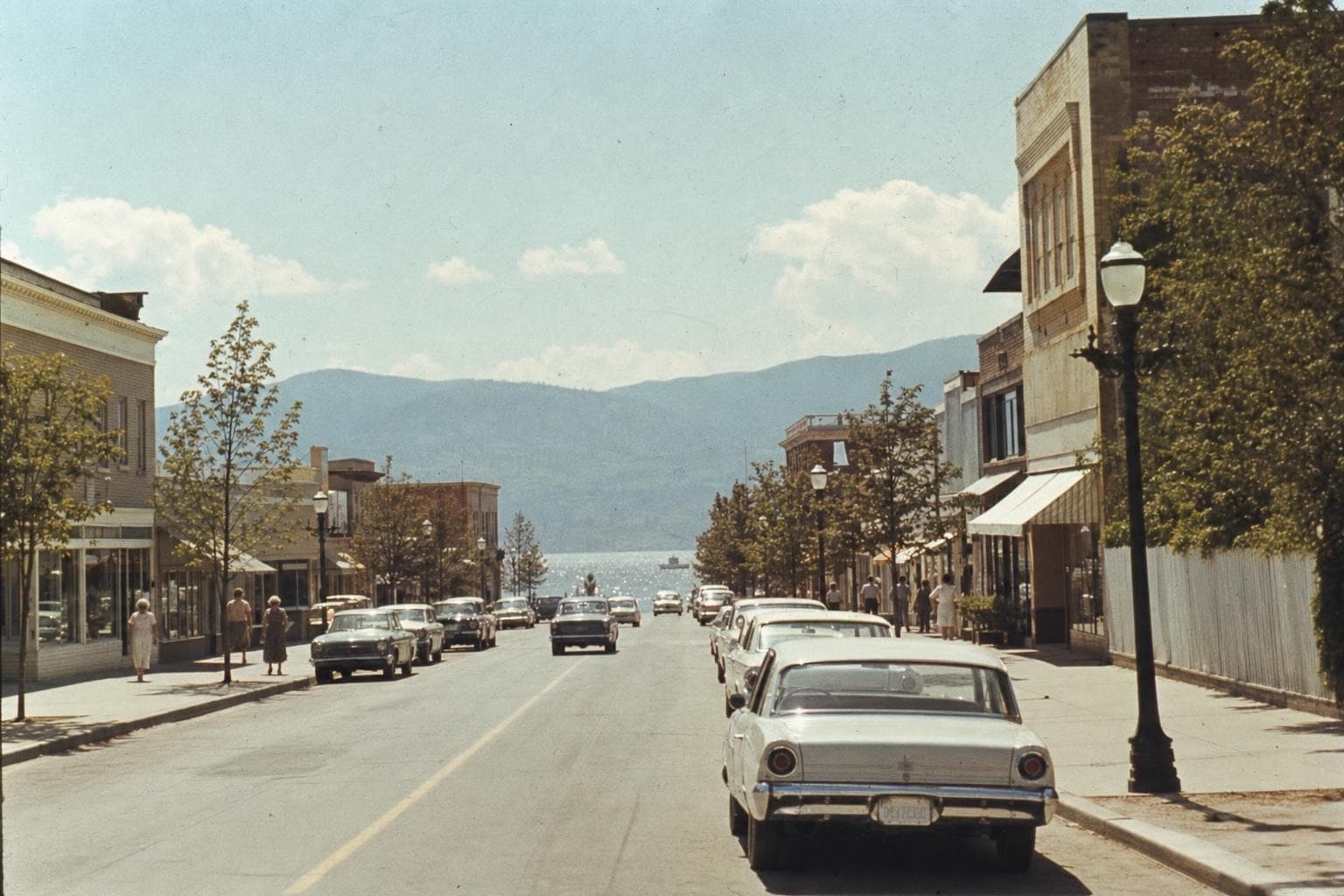
From the archives.
Good to know
Indigenous territory acknowledgement
Where to go to touch the history.
You don't have to take anyone's word for it. These places, all within ten minutes of downtown, tell the story themselves.
1916 engineering feat
Old Mill Footbridge
A 1916 cable suspension footbridge built by mill workers, restored in the 1990s and now a protected heritage landmark over Cedar Creek.
Deep-time heritage site
Cottonwood Point
Evidence of Indigenous use long predates the City. The restored Chapel House, a heritage homestead cabin, still stands among the cottonwoods at the mouth of The Narrows.
Mill-era heritage
Old Mill Heritage Centre
112 Heritage Way. Restored company-town buildings, mill artifacts, and a working bread oven still fired for community events.
Railway history
The Station Museum
The restored rail station in the Old Mill District tells the story of rail and lakeboat Silvermere, the reason the city exists where it does.
What to do next
Living in Silvermere
What it's actually like to live here, told by the locals.
The Silverworks
The Old Mill reborn: market hall, taproom, makers, and the headframe lookout.
Quicksilver Cove
Swim the drowned Pelletier Stope, a silver mine that flooded in a night in 1911.
Lakelight Festival
Silvermere's signature winter festival of light, born from a miners' lantern tradition.
Still need help?
Talk to Silvermere & District Heritage Society
- Phone
- 250-555-0100
- Hours
- Monday to Friday, 8:30am to 4:30pm
- In person
- The Station Museum, 20 Depot Road, Old Mill District, Silvermere, BC
Faster than calling for non-urgent issues. We respond within one business day.
This is a fictional history written for the City of Silvermere concept. Any resemblance to the history of a real community is coincidental.