
Warming & Cooling Centres
When the weather goes extreme, cold or hot, the City and community partners open safe, indoor spaces for anyone who needs them.
Extreme weather shelters
A warm, safe, indoor place, free, no questions asked.
Silvermere winters can drop into dangerous cold, and summer heat waves have reached emergency levels. During extreme events, the City and community partners open warming or cooling centres.
Active locations are announced through Active Alerts and Silvermere Alert. Bookmark both so you have them in the moment you need them.
Current status
- Are any centres open now?
- Check active alerts →
- Overnight winter shelter
- SDCSS (operator)
- Silvermere & District Community Services Society
- Sign up for alerts
- Silvermere Alert
- In a life-safety emergency
- 9-1-1
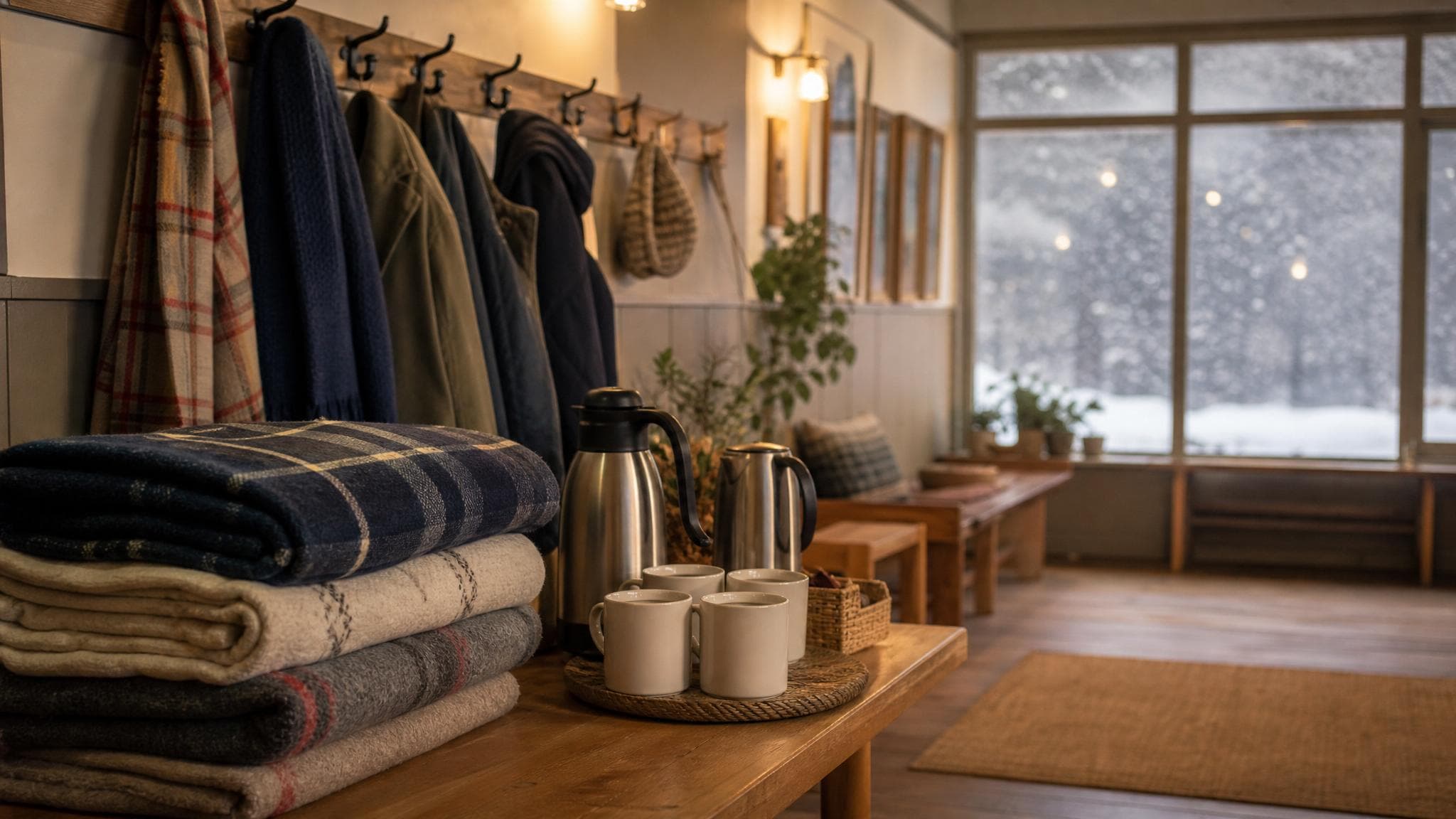
How warming and cooling centres work
You don’t need an emergency to use a warming or cooling centre. If you’re cold, uncomfortable, between places to live, dealing with a power outage, or just want a safe indoor place for the day, you belong there. They exist for exactly that.
When the City or West Highlands Health declares an extreme weather event, partner locations open their doors as drop-in safe spaces. What to expect:
- Free. No intake, no questions, no cost.
- Drop-in hours are posted with each activation (typically noon to 8 p.m., with variations).
- Safe, indoor, climate-controlled space with seating. Some sites offer water, snacks, or charging ports.
- Pets are welcomed at some sites (check current posting), or the West Highlands Animal Services Safekeeping Program may be an option.
- Transportation help is sometimes available, call 250-555-0100 if you need help getting to a centre.
Overnight shelter, year-round
Beyond extreme-weather drop-in centres, Silvermere has a year-round overnight shelter operated by the Silvermere & District Community Services Society (SDCSS). The shelter provides meals, laundry, washrooms, case management, and safe overnight space.
- Out of the Cold shelter at 1660 Lakeshore Avenue has served as the temporary winter shelter.
- New permanent shelter at 2245 6th Avenue, up to 20 spaces, 24/7, year-round.
- Operator: Silvermere & District Community Services Society.
Staying safe in extreme cold
Cold kills, especially when combined with wet or wind. Watch for these warning signs:
- Hypothermia: shivering (or stopping of shivering in advanced cases), confusion, slurred speech, drowsiness, loss of coordination.
- Frostbite: white or greyish skin, numbness, waxy appearance on extremities (fingers, toes, ears, nose).
- If someone shows signs of moderate-to-severe hypothermia, call 9-1-1.
Winter wellness basics
- Layer inner wicking layer, insulating middle layer, windproof outer shell.
- Cover extremities , a warm hat, mittens (warmer than gloves), wool socks, and a scarf or neck gaiter.
- Stay dry. Wet clothing robs body heat fast.
- Eat and hydrate. Your body needs calories and water to generate heat.
- Know the limits of alcohol. Alcohol actually accelerates heat loss.
Frozen pipes, cold homes
- Insulate pipes in unconditioned areas (crawl spaces, exterior walls).
- In a deep cold snap, leave faucets trickling to prevent freezing in vulnerable pipes.
- If your home loses heat (furnace failure, power outage), call a warming centre or a neighbour, don't try to wait it out if temperatures are below freezing indoors.
- Highwater Energy outages: 250-555-0190.
Staying safe in extreme heat
Highlands summers can push above 35°C in the valley, with wildfire smoke often compounding the load. The 2021 BC heat dome killed more than 600 people, mostly seniors living alone in homes without cooling.
Heat illness warning signs
- Heat exhaustion: heavy sweating, weakness, dizziness, nausea, pale and clammy skin. Move to a cool place immediately and hydrate.
- Heat stroke: high body temperature, hot and dry skin (or very heavy sweating), confusion, rapid pulse. Medical emergency, call 9-1-1.
Heat wellness basics
- Hydrate early and often, more than you think.
- Keep the house cool by closing blinds and windows during the day, opening at night when cooler air arrives.
- Cold showers or baths lower core temperature fast.
- A single fan alone is not enough above 35°C, it can actually worsen heat stress. Use air conditioning or a cooling centre.
- Limit outdoor activity to early morning or late evening.
- Never leave children, pets, or seniors in a parked car.
Heads up
Wildfire smoke can compound heat stress
Check on neighbours during extreme weather
The single most effective extreme-weather intervention is a knock on a neighbour's door. People most at risk include:
- Seniors living alone
- People with chronic illness (heart, kidney, respiratory)
- People with mental health or substance use conditions
- People with mobility limitations
- People without safe housing or reliable heating/cooling
- Infants and young children
- People taking medications that affect heat regulation
A two-minute check-in can be the difference between a hard day and a fatal one.
Sign up for Silvermere Alert
Extreme-weather shelter activations are announced through the City's Silvermere Alert system. Signing up takes 5 minutes and is free:
- Choose text, voice, email, or landline.
- Register multiple addresses (home, work, parents' home).
- See Emergency Preparedness for the full picture.
Common questions
Is there a warming centre open right now?
Do I need to qualify to use a centre?
Can I bring my dog?
Where's the permanent shelter?
How do I find out when a centre opens?
What if I can't get to a centre?
I'm worried about my elderly neighbour. What should I do?
What counts as an 'extreme' weather event?
What to do next
Still need help?
Talk to City Hall
- Phone
- 250-555-0100
- Hours
- Monday to Friday, 8:30am to 4:30pm
- In person
- Life-safety emergency: 9-1-1. Crisis: 9-8-8. Overnight shelter: SDCSS (Silvermere & District Community Services Society).
Faster than calling for non-urgent issues. We respond within one business day.
Verified against City of Silvermere news releases, Silvermere & District Community Services Society, West Highlands Health, BC Housing, Environment and Climate Change Canada, and BC Centre for Disease Control. Active locations and hours change each event, confirm before going.